Records of the Past, 2nd series, Vol. I, ed. by A. H. Sayce, [1888], at sacred-texts.com
(Texts: All Artifacts, Color Coding, & Writings in Bold Type With Italics Inside Parenthesis, are Added by Editor R. Brown, not the Authors, Translators, or Publishers!)
(gods in blue…mixed-breed demigods in teal…)
No. 1. COLUMN I

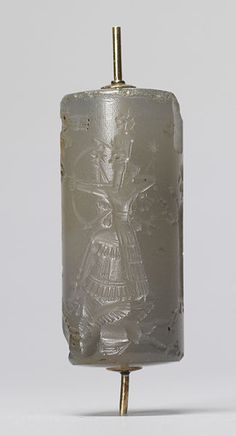 (Ninurta, KIng Anu’s heir to the throne of planet Nibiru, after father Enlil)
1. For the god Nin-girsu (Ninurta) 2. the warrior of the god Ellilla, (Enlil)
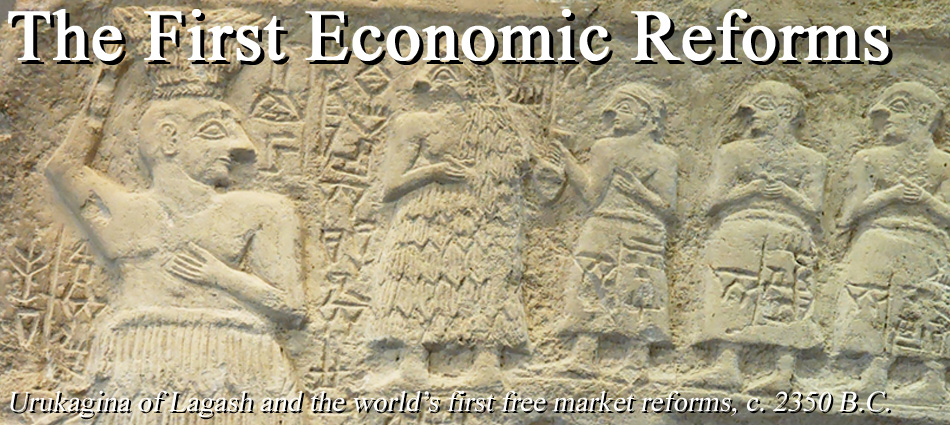 (giant semi-divine mixed-breed king Urukigina & his family)
3. Uru-Kagina,
4. the king
5. of Shirpurla-ki (lagash),
6. his temple
7. has constructed.
8. His palace of Ti-ra-ash
9. he has constructed.
(giant semi-divine mixed-breed king Urukigina & his family)
3. Uru-Kagina,
4. the king
5. of Shirpurla-ki (lagash),
6. his temple
7. has constructed.
8. His palace of Ti-ra-ash
9. he has constructed.
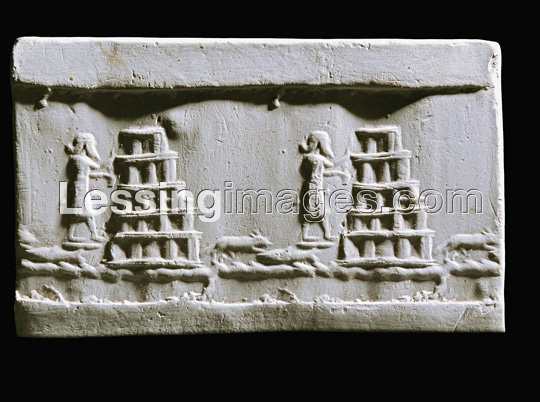

(1st gods, then kings built & repaired ziggurat temple residences of the gods in each city; ex: Ur above)
COLUMN II
1. The an-ta-shur-ra 2. he has constructed. 3. The E-gish-me-ra 4. in order to [be] the E-ne-bi of the countries 5. he has constructed. 6. The house of fruits which produces abundance (?) in the country 7. he has constructed. 8. For the god Dun-shagâna (unidentified?__) 9. his habitation of Akkil
COLUMN III
1. he has constructed. 2. For the god Gal-alimma (Ig-alim, Ninurta’s son) 3. the temple of E-me-gal-ghush-an-ki** 4. he has constructed.**
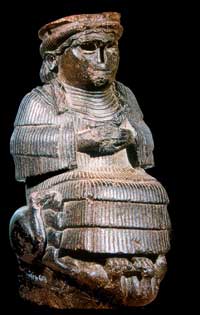
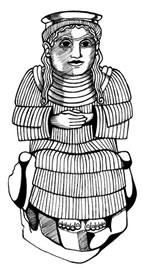 (Princess Bau, King Anu’s daughter, spouse & aunt to Ninurta)
5. The temple of the goddess Bau (__Ninurta’s spouse__) 6. he has constructed.
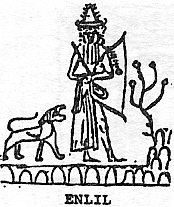
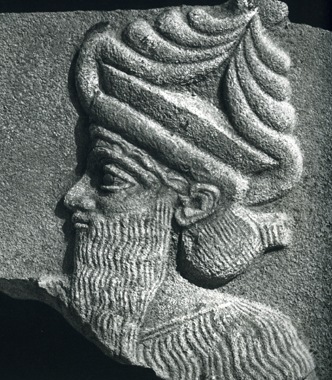 (Earth Colony Commander Enlil, King Anu’s son & heir)
7. For the god Ellilla (Enlil) 8. the temple of E-adda, 9. his im-sag-ga,
COLUMN IV
1. he has constructed. 2. The Bur(?)-sag, 3. his temple which rises to the entrance of heaven (?), 4. he has constructed. 5. Of Uru-Kagina, 6. the king 7. of Shirpurla-ki, 8. who the temple of E-ninnû 9. has constructed, 10. his god
COLUMN V
1. is the god Nin-shagh (unidentified?). 2. For the life of the king 3. during the long days to come 4. before the god Nin-girsu (Ninurta) 5. may he **(**Nin-shagh) bow down his face!
No. 2 On a Buttress
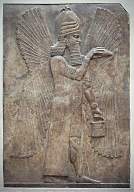 (Ninurta artifact, thousands of others & texts unearthed in Biblical Nineveh ruins)
1. [For the god Nin-girsu], 2. [the] warrior
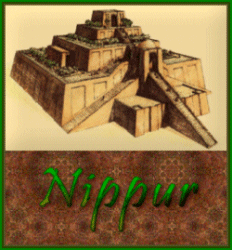
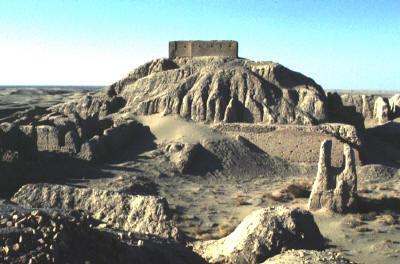 (Enlil’s house in Nippur)
3. [of the god Ellilla (Enlil)__,
4. [Uru-]Ka[g]ina,
5. [the] king
6. [of Shirpur]la-ki,
(Enlil’s house in Nippur)
3. [of the god Ellilla (Enlil)__,
4. [Uru-]Ka[g]ina,
5. [the] king
6. [of Shirpur]la-ki,
7. [the Anta]-Shurra, 8. [the house] of abundance of his country, 9. [has] constructed. 10. His [palace] of Ti-[ra-ash] 11. [he] has constructed.
Lines 12 and 13 are destroyed.
14. [For the god] Gal-alimma (Ig-alim, Ninurta’s son)
Lines 15–21 are destroyed.
22. [he has] constructed. 23. [For the god] Nin-sar (Enki & Ninhursag’s daughter), 24. the bearer [of the sword?] 25. [of the god] Nin-girsu, 26. his temple 27. he has constructed. 28. [For the god …] gir (unidentified?) 29. the well-beloved 30. [of the god] Nin-girsu 31. his temple 32. he has constructed. 33. The Bur(?)-sag, 34. his temple which rises to the entrance of heaven (?), 35. he has constructed. 36. For the god Ellilla (Enlil) 37. the temple of E-adda?, 38. his im-sag-ga, 39. he has constructed. 40. For the god Nin-girsu 41. the sanctuary (?) 42. of E-melam-kurra 43. he has constructed.
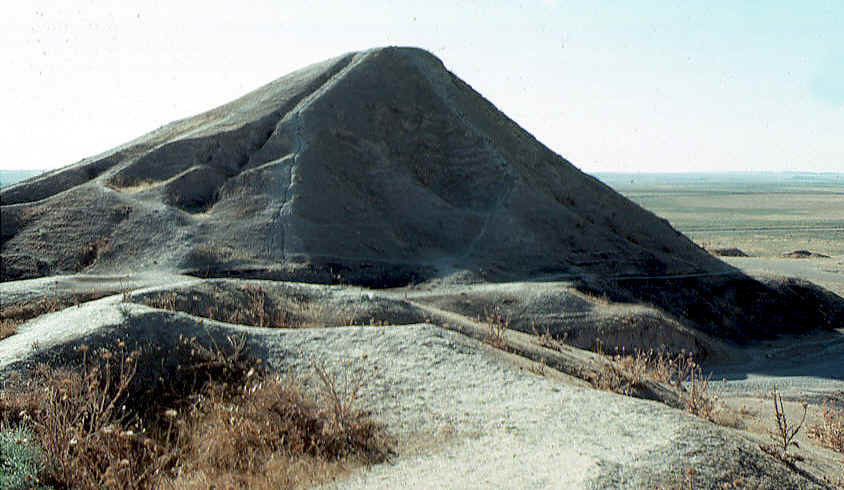 (Ninurta’s temple residence of mud brick)
44. The temple wherein dwells (?) the god Nin-girsu
45. he has constructed.
46. Of Uru-Kagina,
(Ninurta’s temple residence of mud brick)
44. The temple wherein dwells (?) the god Nin-girsu
45. he has constructed.
46. Of Uru-Kagina,
47. who the temple 48. of the god Nin-girsu …
The inscription breaks of here, having never been finished.
_________
**No. 3.—**On a Cylinder
COLUMN I
The first lines are lost.
1. Uru-Kagina, 2. the king 3. Of Girsu-ki, 4. the Anta-shurra, 5. the house of abundance of his country, 6. his palace of Ti-ra-ash, 7. has constructed.
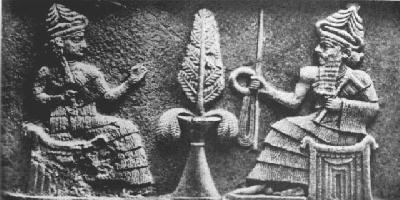 (Bau & her nephew-spouse Ninurta in Lagash)
8. The temple of the goddess Bau 9. [he has] constructed.
Lacuna.
COLUMN II
The first lines are lost.
1. he has [constructed]. 2. For the god [Dun-sha**]ga[na] _(unidentified)_ 3. his habitation of [Akkil] 4. he has [constructed]. 5. For the god … 6. his tablet-like amulets (?)2 7. (and) his temple he has made. 8. In the middle (of this temple) 9. for the god Za-za-uru _(unidentified?)_, 10. for the god Im-ghud-ên _(unidentified?)_, 11. for the god Gim-nun-ta-ên-a _(unidentified?)**_
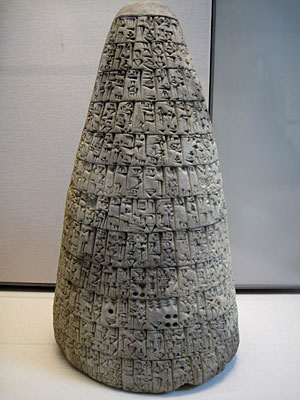 (giant King Urukigina’s “Proclamation of Liberty” text)
12. temples he has built for them.
13. For the god Nin-sar (Enki & Ninhursag’s daughter, Ninkurru’s mother)
Lacuna.
COLUMN III
The first lines are lost.
1. [For the god Ellilla (Enlil) 2. [the temple of E-]adda, his [im-]sagga, 3. he has constructed. 4. For the goddess Ninâ (Enki & Ninhursag’s daughter, mother to Ninmarki), 5. her favorite river, 6. the canal Ninâ-ki-tum-a 7. he has excavated (?). 8. At the mouth (of the canal), an edifice…
Fragments of four other columns remain.
Footnotes
68:1 From a squeeze in the Louvre. Translated by Dr. Oppert in a Communication to the Académie des Inscriptions, 29th February 1884**.**
69:1 [Bau is probably the Baau of Phœnician mythology, whose name was interpreted “the night,” and who was supposed along with her husband Kolpia**, “the wind,” to have produced the first generation of men. The word has been compared with the Hebrew bohu, translated “void” in Gen. i. 2.—Ed.]**
69:2 [“The temple of the father.”—Ed.]
69:3 Or Nin-dun.
70:1 [“The temple of the father.”—Ed.]
70:2 [“The temple of the brilliance of the (eastern) mountain.”—Ed.]
71:1 Découvertes, pl. 32.
71:2 Possibly the small tablets of white or black stone buried under the foundations of the temples. These tablets were sometimes of metal; those, for example, discovered at Khorsabad. It seems that some consisted also of ivory and precious wood; see W.A.I., i. 49, col. 4, 12.