(Texts: All Artifacts, Color Coding, & Writings in Bold Type With Italics Inside Parenthesis, are Added by Editor R. Brown, not the Authors, Translators, or Publishers!)
(gods in blue…mixed-breed demigods in teal)
The one who administers correctly (all) regions (of the world) [(…)], The tireless one, who watches over all of heaven and netherworld (__Nergal’s domain)… The lord, whose shining light covers mountain and sea, And whose awe-inspiring sheen covers the wide[spread] world (Sun God Utu), The noble one at whose utterance the [Igīgū] (Igigi, alien space truckers under Marduk) gods pay attention, And at the issuing of whose command the Anunnakū (Anunnaki, alien giants) gods take fright [(…)], presenting themselves on their knees (lit. “stand kneeling”), The august judge, who makes decisions for god and go[ddess], The one who dwells in Ebabbar (“Shining House”), (__Utu’s ziggurat / residence in Sippar) the one on whom his fathers rely — 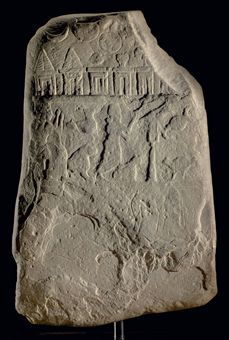 (semi-divine Babylonian King Nebuchadnezzar I & symbols of the gods) At that time, a royal descendant, one of an enduring lineage, (Nebuchadnezzar I) scion of Šuanna (Suzianna, Enlil’s junior wife) (Babylon), Wise viceroy, reverent, prayerful, one who makes his (the Sun-god’s) (Utu) heart glad,
 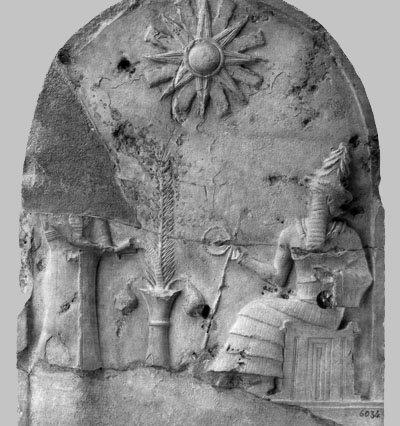 (damaged semi-divine king receives his instructions from giant Sun God Utu) Because the king constantly besought the Sun-god (Utu), the light of the gods, with supplication(s) and prayer(s), He (the Sun-god) looked happily (upon him) and gave him the kingship of all people (and) of every region (of the world). He granted him a just sceptre, an eternal throne, (and) a reign of long duration.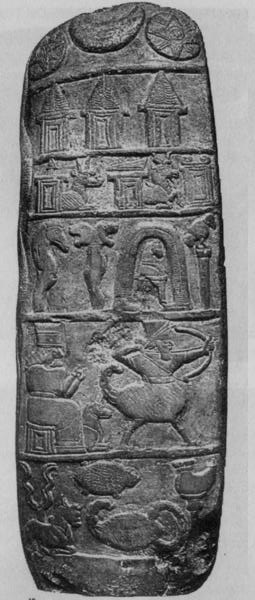
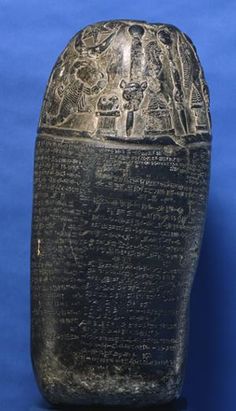 (semi-divine Nebuchadnezzar I kudurru / boundary stones with symbols & text) He gave orders to him to plunder the land of Elam and he … He had been brought to the land of Elam; he turned [it] back (and) inflicted a defeat upon i[t]. The great gods who had become an[gry] with the land of Akkad (and) had gone to the land of Elam […] … […] … over the regions (of the world) […] [May] his reign [be made] great and may it be securely established forever in the land of Sumer and Akk[ad]!